What's Marco Rubio's role as secretary of state and Trump's national security advisor?
Politics
What's Marco Rubio's role as secretary of state and Trump's national security advisor?
Scott Simon
What's Marco Rubio's role as secretary of state and Trump's national security advisor?
- Download
-
Embed
<iframe src="https://www.npr.org/player/embed/nx-s1-5745099/nx-s1-9688199" width="100%" height="290" frameborder="0" scrolling="no" title="NPR embedded audio player"> - Transcript
New Yorker staff writer Dexter Filkins tells NPR's Scott Simon about Marco Rubio's role as Secretary of State and National Security Advisor to a president shaking the world order.
SCOTT SIMON, HOST:
President Trump's Cabinet features more than a couple former rivals for the presidency, but just one from his own party - Marco Rubio. A senator from Florida, Marco Rubio supported a stable world order and human rights. He advocated for aid to be deployed as American soft power. As secretary of state and national security adviser, he now serves a president who campaigned on leaving the world to its own devices but who, in office, has upended global stability. Just this year - and remember, it is only March - the United States raided the capital of Venezuela and captured that country's leader and launched an ongoing attack on Iran. President Trump says that Cuba, where Rubio has family roots, could be next.
Dexter Filkins profiled Marco Rubio for The New Yorker, and he joins us now. Thanks so much for being with us.
DEXTER FILKINS: Thank you for having me.
SIMON: Ten years ago, Donald Trump and Marco Rubio were antagonists on the debate stage. How did Marco Rubio become his secretary of state?
FILKINS: Well, you know, Trump has a history of forgiving people who've insulted him. And even during the campaign in 2016, when they went behind the stage, they chatted a lot, and they became kind of friends. And so in that way, I think they both realized that politics is a game, and a lot of it is performance. And they kind of set that aside when the cameras are off.
SIMON: And what kind of U.S. senator was he? He arrived just as the Tea Party was gaining power, criticized President Obama. But then, of course, he worked towards things like immigration reform.
FILKINS: He did. I mean, he has an interesting past, political past. It's actually - it's difficult to track because he moves around so much. Rubio - if you look at the course of his career, he's said different things on different occasions, and it's basically whatever suits the occasion. But...
SIMON: I mean...
FILKINS: And I think...
SIMON: I should note that's the most common criticism you hear of politicians in both parties.
FILKINS: Well, I think Rubio has a special - yeah, he's in a special category on that front. But as a U.S. senator, Marco Rubio relentlessly advocated for a very active role for America abroad as the leader of the free world, as a donor of foreign aid, as a country that was willing to intervene, sometimes militarily if necessary. And so when he paired with Trump, the curiosity was - is Rubio going to have to lose all that? Because President Trump campaigned on America First, getting America out of all these stupid alliances that we're in and not starting any wars. What's happened, of course, is entirely the opposite.
SIMON: What brought Donald Trump over to Marco Rubio's way of thinking? I - forgive me for putting it this way. Was he played?
FILKINS: Not a chance. Not a chance that he was played. But I think President Trump is an activist president. He involves himself in everything. And I think Iran has been a problem for every American president going all the way back to Jimmy Carter. And so it's not that surprising to me that Trump, once engaged in Iran, would try to settle it. I am surprised that we got back into it in the way that we did. If you remember, there was no speech to the nation. There was no congressional vote. Trump posted something on, you know, Twitter or Truth Social at 2:30 in the morning.
Marco Rubio said I think what still remains a very curious thing when he was asked about why we attacked Iran when we did. And he said, well, the Israelis were going to do it whether we went or not. And so if the Israelis did it, then we figured the Iranians would probably attack our bases in the Middle East, so we jumped in. And he backed away from that, you know, at a hundred miles an hour after he said it. But I think if anybody played President Trump, it's not Marco Rubio, but it's Netanyahu in Israel.
SIMON: And I have to ask about Cuba because, of course, Secretary Rubio has a - yeah, I can say it - a personal relationship.
FILKINS: He does, indeed. The prospect of bringing that regime down - that's the dream for, like, every elected official in Miami, is to be - and Marco Rubio is now in the catbird seat and might be in a position to do something about that. I wouldn't predict the future here because if we look at the Iran war, I think it's not going the way that they expected it to go. And so, you know, I would probably hit the pause button on Cuba, at least until there's some kind of outcome.
SIMON: Do you think Secretary Rubio's running for president?
FILKINS: I think he wants to be president (laughter). He ran for president. It's probably a race between Marco Rubio on one hand and JD Vance, the vice president, on the other. One of the questions that caroms around Washington all the time is, like, who's Trump going to pick? You know, who does Trump want? Is he closer to JD, or is he closer to Marco? And, you know, all this is kind of playing out as we speak, but we've got a long way to go before we get to 2028.
SIMON: Dexter Filkins is staff writer for The New Yorker who has profiled Secretary of State Marco Rubio. Thanks so much for being with us.
FILKINS: Thank you, sir. I really appreciate it.
Copyright © 2026 NPR. All rights reserved. Visit our website terms of use and permissions pages at www.npr.org for further information.
Accuracy and availability of NPR transcripts may vary. Transcript text may be revised to correct errors or match updates to audio. Audio on npr.org may be edited after its original broadcast or publication. The authoritative record of NPR’s programming is the audio record.
OpenAI’s adult mode will reportedly be smutty, not pornographic
The feature was delayed, reportedly due to internal concerns surrounding moderation and safeguarding children.
The feature was delayed, reportedly due to internal concerns surrounding moderation and safeguarding children.

OpenAI’s delayed “adult mode” for ChatGPT is expected to support saucy text conversations at launch, but not the chatbot’s ability to generate images, voice, or video. Speaking to The Wall Street Journal, an unnamed OpenAI spokesperson described content that will be provided by the upcoming feature as smut rather than pornography, allowing ChatGPT users to generate textual chats with adult themes.
The feature was initially announced in October, with OpenAI CEO Sam Altman claiming that the company had managed to mitigate enough of the “serious mental health issues“ with its AI model to relax safety restrictions and introduce “erotica for verified adults.” ChatGPT’s adult mode was expected to launch sometime this quarter, but OpenAI said earlier this month that it was delaying the rollout to focus on higher-priority tasks. A new release timeline has yet to be announced.
The delay was also due to internal concerns and technical challenges around safeguards for the feature, according to The Wall Street Journal’s reporting. A council of advisors selected by OpenAI warned the company in January that ChatGPT’s adult mode may be accessible to children and foster unhealthy emotional dependence on the chatbot, with one unnamed council member saying OpenAI risked creating a “sexy suicide coach.”
Related
- OpenAI fired exec who opposed ‘adult mode.’
- How chatbots are enabling AI psychosis
Content moderation issues have also contributed to the delays. Sources familiar with the matter told The Journal that OpenAI is struggling to lift ChatGPT’s restrictions on NSFW content while keeping more harmful scenarios off limits, such as those depicting nonconsensual behavior or child sexual abuse.
The age-prediction system that OpenAI developed to keep children away from erotica was also, at one point, misclassifying minors as adults about 12 percent of the time. Given ChatGPT attracts around 100 million users under 18 each week, that error rate could allow millions of minors into sexualized conversations with the chatbot. OpenAI’s age prediction algorithms show similar performance to the rest of the industry, an unnamed spokesperson told The Journal, but “will never be completely foolproof.”
Sticking to text-based conversations may make it easier for the ChatGPT-maker to navigate around rules like the UK’s Online Safety Act, which requires online platforms to enforce age verification for pornographic images, but not written erotica. It also contrasts with more visual NSFW experiences from rival AI providers, such as Grok’s “spicy” companions, with xAI’s Elon Musk announcing last week that Grok’s image and video generator is allowed to spit out anything that’s “allowed in an R-rated movie.”
Follow topics and authorsMost Popular
- European retailers yank popular headphones after study reports trace amounts of hormone-disrupting chemicals
- Meta is reportedly laying off up to 20 percent of its staff
- The $100,000 fee for H-1Bs is causing all sorts of problems
- MacBook Air M5 review: a small update for the ‘just right’ Mac
- The fast rise and epic fall of Clubhouse
2026 Oscars Analysis: How ‘One Battle’ Beat ‘Sinners,’ Jordan Overcame Chalamet and Penn Won Without Doing Anything
- Share on Facebook
- Share on X
- Google Preferred
- Share to Flipboard
- Show additional share options
- Share on LinkedIn
- Share on Pinterest
- Share on Reddit
- Share on Tumblr
- Share on Whats App
- Send an Email
- Print the Article
- Post a Comment
An awards season that often felt like an endurance test — talk about one battle after another — came to an end on Sunday evening with the 98th Academy Awards. The results at the Dolby Theatre in Hollywood confirmed that even though the Academy has changed significantly over the decade since it was rocked by #OscarsSoWhite — its membership today includes way more non-males, non-whites, non-Americans and non-AARP-members than ever before — the statistics that have long offered clues about Oscars outcomes remain dependable.
Indeed, despite all the talk of a late Sinners surge, One Battle After Another still won the top prize, best picture, just as it did at every other notable awards ceremony this season — from the Gothams to the Golden Globes to the guilds, not to mention all the major critics groups, plus the BAFTA Awards — save for the Actor Awards (formerly the SAG Awards) two weeks ago.
Related Stories
Jessie Buckley Closes Her Best Actress Oscar Acceptance Speech With Gaelic Message
'Bridesmaids' Star Wendi McClendon-Covey Clears Up Her Absence From Oscars Reunion: "I Had a Neck Lift... No Drama"
It was easy to get swept up in the excitement of Sinners’ best cast win at the Actor Awards — the reaction in the room was exuberant — but that prize has a terrible track record of predicting the best picture Oscar (now just 15 of 32 times). The fact that the best cast Actor Award did presage several of the biggest best picture Oscar surprises of yesteryear (including Shakespeare in Love, Crash and Parasite), and that this year’s Actor Awards took place in the middle of the final round of Oscars voting, unfortunately gave Sinners supporters false hope.
Why did Paul Thomas Anderson‘s film prevail over Ryan Coogler‘s when both were Warner Bros. releases that skipped the festival circuit, went directly to movie theaters and proved to be darlings of critics and audiences alike, and when Sinners grossed more money and landed more Oscar nominations (16 — two more than the previous all-time record — versus 13)? Let’s unpack that…
For one thing, being the most Oscar-nominated film of the year has limited significance. In the past decade, it didn’t help Emilia Pérez against Anora, The Power of the Dog against CODA, Mank against Nomadland, Joker against Parasite, The Favourite and Roma against Green Book, La La Land against Moonlight or The Revenant against Spotlight. And this year, you couldn’t fault One Battle for not having an original song or much in the way of makeup/hairstyling or visual effects, the three categories in which Sinners landed noms but One Battle did not. Both films got nominated for everything they could have realistically hoped for (minus One Battle’s newcomer Chase Infiniti in the crowded best actress race).
Additionally, One Battle had genre on its side. In the post-#OscarsSoWhite era, the Academy has embraced a wider assortment of films than ever before, rendering moot the notion of an “Oscar movie” by awarding best picture to The Shape of Water, Parasite and Everything Everywhere All at Once. But a zombies-centric film — up against a dramedy/thriller — was perhaps a bridge too far for even a hipper Academy.
Most significantly, I think, One Battle was a major work — if not the best work — of a filmmaker widely regarded as overdue for recognition, not unlike The Departed (Martin Scorsese) or Oppenheimer (Christopher Nolan). Indeed, prior to One Battle, Anderson was already well-established as one of the greatest filmmakers of his generation — see Boogie Nights, Magnolia, Punch-Drunk Love, There Will Be Blood, The Master and Phantom Thread, in particular — and yet had gone 0-for-11 at the Oscars. One Battle provided voters with a sufficient excuse to right that wrong.
On Sunday, it became clear pretty early in the show that Sinners’ best picture prospects were in trouble. If the film had the juice to topple One Battle, then that probably would have manifested itself in the race for best supporting actress, but Sinners’ Wunmi Mosaku came up short; shortly thereafter, it lost the inaugural Oscar for best casting — which every pundit of note had predicted it to win — to One Battle, no less; and by the time Sinners’ Delroy Lindo lost best supporting actor to one of the two One Battle nominees in that category, the cake was baked.
Fortunately, both films’ auteurs got moments in the sun — Anderson won best adapted screenplay and Sinners‘ Ryan Coogler won best original screenplay back-to-back before Anderson claimed best director and best picture later in the night. Plus, both films took home acting awards (best actor for Sinners and best supporting actor for One Battle) and craft awards (casting and film editing for One Battle, cinematography and original score for Sinners). The final score: One Battle 6, Sinners 4.
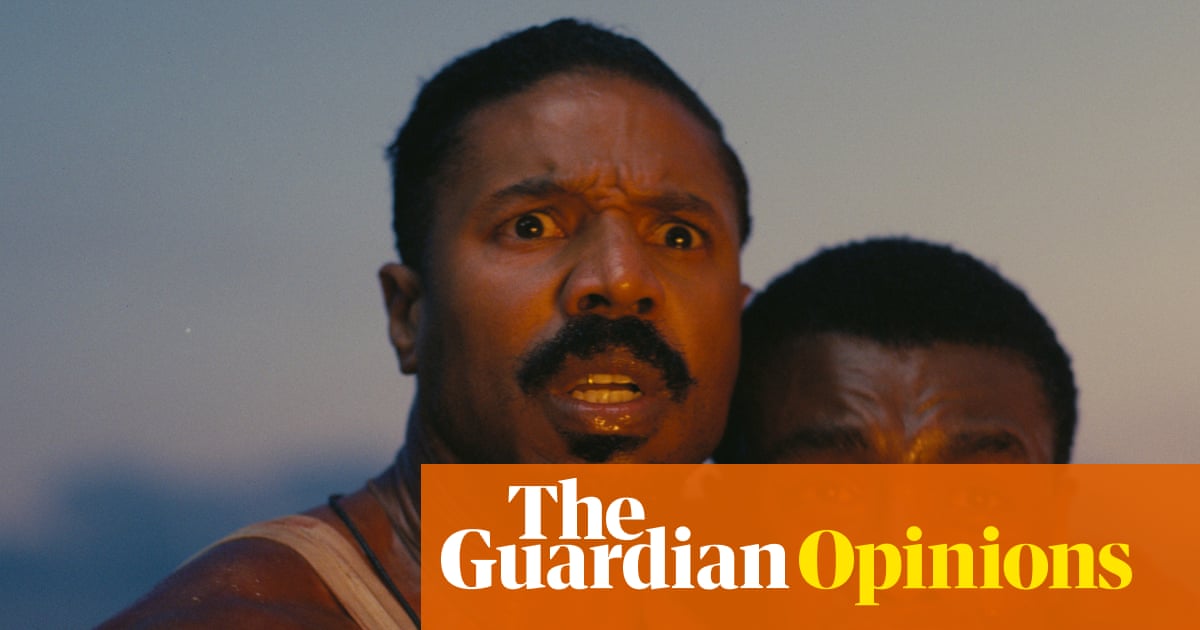
Speaking of the acting awards, though, it must be noted that the Actor Awards were, in fact, the only awards group to presage all four of this year’s individual acting Oscar winners: Hamnet’s Jessie Buckley for best actress, Sinners’ Michael B. Jordan for best actor, Weapons’ Amy Madigan for best supporting actress and One Battle’s Sean Penn for best supporting actor.
It’s interesting that a group comprised only of actors (SAG-AFTRA, all 160,000 members of whom vote for the Actor Awards winners) and a group in which actors account for less than 12% of all voters (the Academy) both responded not only to the same performances, but to performances that might be described as Acting with a capital A: Buckley playing a grieving mother who wails upon losing a child and seems possessed by a theatrical production; Jordan playing twins with very different personalities; Madigan chewing scenery in clown makeup; and Penn sporting an erection and a glass eye.
They all took very different paths to their wins.
Penn did not campaign or show up for any award shows except the Golden Globes, but gave such a memorable performance — and, despite being a difficult guy, is so highly regarded as an actor — that he still won BAFTA and Actor Awards en route to Academy members catapulting him into its rarified club of three-time male acting Oscar winners (the only other members of which are Walter Brennan, Jack Nicholson and Daniel Day-Lewis).
Penn was up against formidable talents, including two septuagenarian first-time nominees, Sentimental Value’s Stellan Skarsgård and Sinners’ Lindo. But a path to victory was always going to be tough for a performance not in English (Skarsgård would have been the first such winner in the supporting actor category) and/or a performer who wasn’t even nominated for any other major award (Lindo hoped to follow in the 25-year-old footsteps of Marcia Gay Harden, the only person who has ever overcome that stat).
Madigan, meanwhile, won early in the year at the Critics Choice Awards, in something of a surprise — many were still predicting Wicked: For Good’s Ariana Grande at the time — and only continued to build goodwill between then and the Actor Awards, when she won again.
To be sure, the other precursors were all over the place, with Sinners’ Mosaku winning BAFTA, One Battle’s Teyana Taylor winning the Golden Globe and Sentimental Value’s Inga Ibsdotter Lilleaas winning some big critics prizes. And it was a bit disconcerting that Madigan was her category’s only nominee whose film wasn’t also up for best picture.
But what proved to be more important is that she has been in the business forever (her prior Oscar nom came 40 years ago, before any of her fellow supporting actress nominees were even born), knows and is known by everyone (whereas most people had not even heard of three of her four fellow nominees a year ago) and is one-half of a great Hollywood couple (not unlike another veteran who won the same Oscar for another horror film 57 years ago, Rosemary’s Baby’s Ruth Gordon).
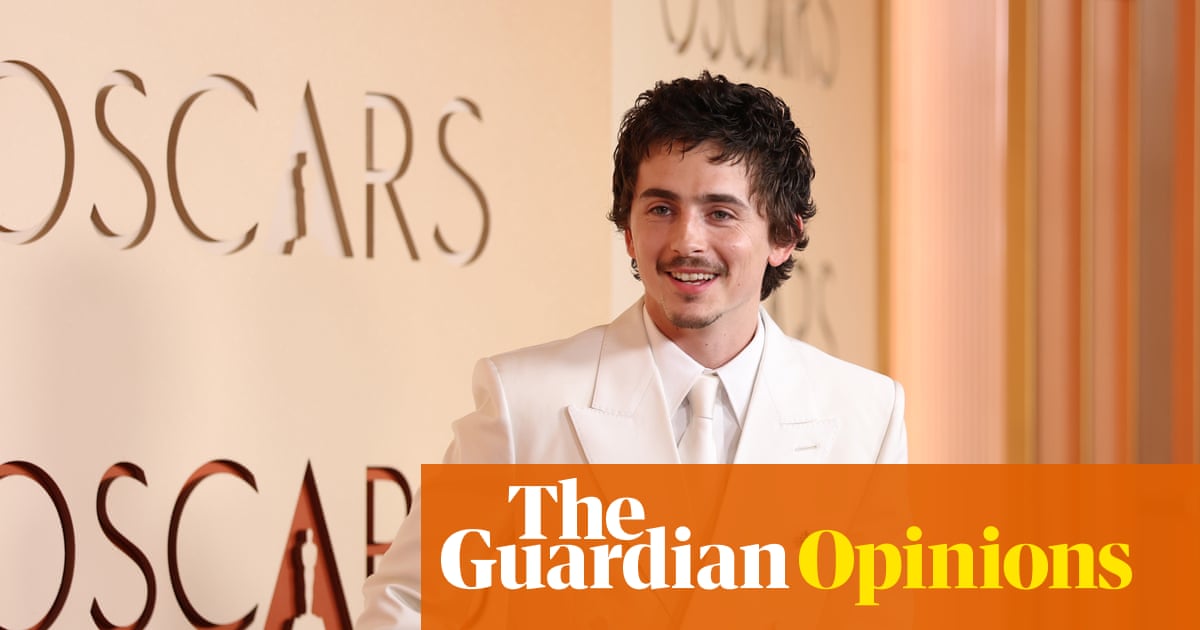
As for Jordan, he initially seemed to be trailing Marty Supreme’s Timothée Chalamet, given that won at the Critics Choice and Golden Globe awards — but those two prizes were determined solely by journalists, of which there are virtually none in the Academy. The Academy clearly preferred Sinners to Marty Supreme — Marty Supreme ended up going 0-for-9 at the Oscars, a worse shutout than all but five films ever, The Turning Point (0-for-11), The Color Purple (0-for-11) Gangs of New York (0-for-10), the 2010 True Grit (0-for-10) and American Hustle (0-for-10). And many individual members said they were repelled by the character Chalamet played in the film.
Additionally, it seems that the best actor race was jolted, in the homestretch, by a variety of factors, from Chalamet’s unconventional approach to campaigning, which rubbed many the wrong way, to the terribly unfortunate incident that occurred while Jordan and Lindo were presenting at the BAFTA Awards, which evoked from many sympathy and admiration. Plus, seeing Jordan win the best actor Actor Award in the middle of the Oscar voting window presented to Academy members a clear and appealing alternative to Chalamet.
Buckley, meanwhile, was a no-doubter from the moment her film premiered at the Telluride Film Festival. Even people who disliked Hamnet liked her performance and her, and why not? In addition to being a tremendously gifted actress, she is also one of the most genuine and lovely people I encountered all season long. And my guess is that the Irishwoman, at just 36, will soon be back in the hunt for a sibling for her new statuette.
Elsewhere, best documentary feature went to the team behind Kino Lorber’s powerful Mr. Nobody Against Putin (my tablemates at the Oscar Nominees Luncheon) over another equally affecting exposé, Netflix’s The Perfect Neighbor. But Netflix dominated the remaining categories, picking up best costume design, makeup/hairstyling and production design for Frankenstein; for KPop Demon Hunters, the most watched original film in its history, best animated feature and original song (“Golden”); best documentary short for All the Empty Rooms; and for The Singers, which the company was smart enough to acquire — probably for a pittance — late in the season, best live action short (in a tie with Two People Exchanging Saliva). The streamer’s total tally of seven matches a company-best (first achieved five years ago).
Some final takeaways?
I thought that this year’s telecast, like last year’s, was very solid, highlighted by returning-host Conan O’Brien’s amiable emceeing; a skillfully executed In Memoriam segment (although the omission of Brigitte Bardot was inexcusable); the Sinners and KPop Demon Hunters performances; and the suspenseful presentations and gracious acceptances of the big awards. Also, kudos to Kumail Nanjiani for his deft handling of the potentially treacherous terrain of a tie (only the seventh in Oscars history, 13 years after the sixth, which I remember witnessing in 2013).
My only quibbles with the show: the Marvel “reunion” was overhyped (just Robert Downey Jr. and Chris Evans?); the playing-off of winners was handled poorly for the second year in a row; and a bunch of presenter decisions seemed off to me. Bill Pullman and Lewis Pullman are fine talents, but don’t rise to the level of accomplishment or familiarity that would merit being Oscars presenters; Robert Pattinson and Zendaya were odd choices to present best director, as opposed to, say, recent winner and current Directors Guild president Christopher Nolan; and as much as I love Ewan McGregor and Nicole Kidman, I’m not sure that the 25th anniversary of Moulin Rouge!, a film to which the Academy awarded only two Oscars (art direction and costume design), merited having them co-present best picture. (I wonder if they tried Tom Cruise, one of this season’s honorary Oscar recipients?)
I’ll close with a few personal notes. (1) I was very pleased that the final Feinberg Forecast of the season correctly projected 21 of 24 categories, including all of The Big Eight and all three shorts. (2) I was heartened to see so many past guests of my podcast Awards Chatter take home Oscars, among them Jordan, Buckley, Penn, Madigan, Sentimental Value’s Joachim Trier, All the Empty Rooms’ Joshua Seftel and KPop Demon Hunters’ EJAE. I thank them for their time, and encourage you to subscribe — for free — if you haven’t already done so. (3) And lastly, I want to thank my THR colleagues, readers/listeners and friends/family for their support over the course of this whole season — it was a grueling but mostly enjoyable ride that ended with my 15th trip to the Oscars, a privilege that I do not take for granted. And now… sleep!
THR Newsletters
Sign up for THR news straight to your inbox every day
-
international
How Ursula K. Le Guin’s “Carrier Bag Theory” Inspired Two CPH:DOX Films
-
Oscars 2026
Jessie Buckley Closes Her Best Actress Oscar Acceptance Speech With Gaelic Message
-
Wendi McClendon-Covey
‘Bridesmaids’ Star Wendi McClendon-Covey Clears Up Her Absence From Oscars Reunion: “I Had a Neck Lift… No Drama”
-
international
‘The Sandbox’ Doc Director on Her “Story About Power” and Hope to Make Us Think About How We Choose to Use, or Not Use, Technology as a Tool
-
Warner Bros.
Michael B. Jordan’s Advice to Fellow Artists After Oscar Win: “Dream Big and Be Kind”
-
international
Zhang Ziyi, Liu Haoran, Terrance Lau Receive Special Honors at Stripped-Down Asian Film Awards