Samsung Galaxy S26 Ultra review: its huge screen blocks shoulder surfers from spying on you
Samsung Galaxy S26 Ultra review: its huge screen blocks shoulder surfers from spying on you
Latest Android superphone packs great cameras, fast chips, long battery, a stylus and first-of-its-kind privacy display
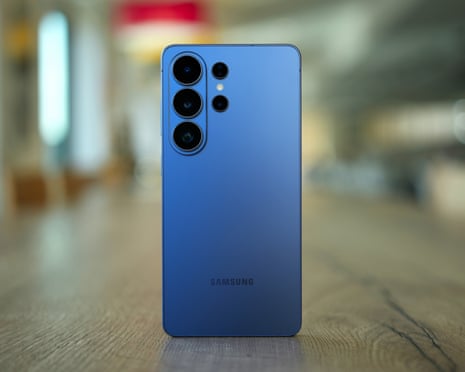
Samsung’s latest Ultra superphone promises to keep shoulder surfers out of your business with a first-of-its-kind privacy display built into its huge 6.9in screen.
The Galaxy S26 Ultra is Samsung’s top-of-the-line phone costing £1,279 (€1,449/$1,299/A$2,199) and is one of the most feature-packed handsets you can get, with four cameras on the back, an integrated stylus and AI assistance in every corner.
That includes a choice of three built-in AI chatbots, such as Google’s Gemini, Samsung’s revamped Bixby and Perplexity, and new predictive AI features that bring the Samsung in line with Google’s top Pixel phones.
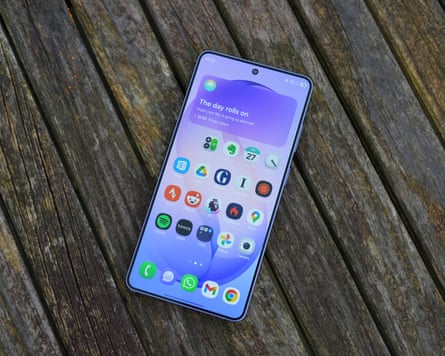
The hard corners of previous generations have been smoothed over for the S26 Ultra to more closely resemble the other S26 versions, but that makes it look a bit more generic and loses its monolithic slab vibe. The sides are now aluminium, ditching the titanium from the last two years, which looks and feels good but is softer and picks up marks more easily.
The new Ultra is 4g lighter and a smidgen thinner than its predecessor but the camera sticks miles out of the back. The phone is a beast requiring two hands to use most of the time but the huge screen is fantastic: bright, crisp and smooth. A delight to watch video or play games on.
Most impressive is the display’s new privacy trick that intentionally reduces its viewing angles to make it very difficult to read when not straight on. It is a feature common to business laptops but is a first for a smartphone without some additional film being applied to the screen.

It can be toggled on and off using quick settings, with two intensity levels, or activated only for certain tasks such as when using your banking app or entering your pin or password on the lock screen. You can also set it so that only notifications are blocked out, which keeps the rest of the screen easily viewable.
It will not stop anyone directly over your shoulder from seeing your screen but everyone else should be blocked out.
Good software but so-so AI tools
The Ultra runs One UI 8.5 (Android 16) out of the box, packed with generative AI. A lot of the smaller stuff works well, such as transcription, image editing and text tools. Call assist blocks spam calls by answering for you and asking the caller their reason for ringing, matching the popular feature on Pixels and iPhones.
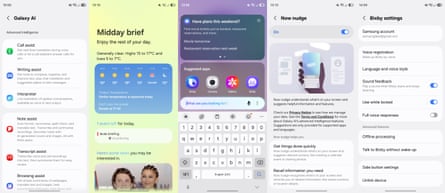
The most interesting AI addition is Samsung’s version of Google’s Magic Cue called “Now Nudge”, which pulls data from various apps on your phone and offers timely suggestions above the keyboard in messaging apps. It will suggest recent photos, calendar events, locations and other information. It shows promise but is limited compared with Magic Cue.
The upgraded Bixby is better than before. It will perform actions on your phone, such as turning settings on and off, but other requests it hands off to Perplexity. It works OK, but with Gemini baked in, I’m just not sure why you would bother using it.
Samsung will provide software updates until 28 February 2033, making it one of the longest-supported phones available.
Specifications
-
Main screen: 6.9in QHD+ Dynamic Amoled 2X (500ppi) 120Hz
-
Processor: Qualcomm Snapdragon 8 Elite Gen 5 for Galaxy
-
RAM: 12 or 16GB
-
Storage: 256, 512GB or 1TB
-
Operating system: One UI 8.5 (Android 16)
-
Camera: 200MP + 50MP 0.6x + 10MP 3x + 50MP 5x; 12MP front-facing
-
Connectivity: 5G, USB-C, wifi 7, NFC, Bluetooth 6, UWB and GNSS
-
Water resistance: IP68 (1.5m for 30 mins)
-
Dimensions: 163.6 x 78.1 x 7.9mm
-
Weight: 214g
Speed, battery life and fast charging
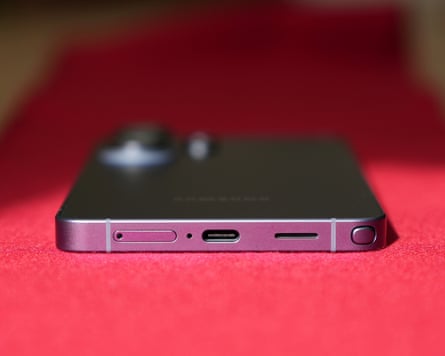
The phone has the fastest Android chip available with a custom version of Qualcomm’s top Snapdragon Elite Gen 5, which is highly performant in all aspects and is particularly good for gaming and other intensive tasks.
The battery is equally excellent, lasting a good two days between charges with the screen actively used for eight hours across various tasks on a mix of wifi and 5G. It should see out even the heaviest of day’s use, making it a great choice for gaming.
Sustainability

Screen repairs cost £209 by authorised service centres and include a battery replacement. Samsung also offers a self-repair programme.
The phone contains 17.7% recycled content. Samsung offers trade-in and recycling schemes for old devices. The company publishes annual sustainability reports and impact assessments for some individual products.
Camera

The Ultra has four cameras on the back offering greater range than competitors. For this year Samsung has upgraded the lenses on the 200-megapixel main and 50MP 5x telephoto cameras to collect significantly more light. The result is brighter, more detailed images in low-light scenes and less blurry shots of moving subjects because of faster shutter speeds.
The 50MP ultra-wide camera is still one of the best on a phone, with good detail up close. The main camera shoots 12MP photos by default producing great images with plenty of detail. It can also shoot 50MP or 200MP images and performs a solid 2x crop zoom. Magnifying further switches to the 10MP 3x telephoto, which is the weakest of the four cameras. The 5x telephoto camera’s new faster lens produces much better depth of field with pleasing bokeh for portraits, without having to resort to Samsung’s excellent but artificial portrait mode. It can also stretch to a 10x crop zoom before deploying digital zoom up to 100x, which starts looking degraded above 30x.
The camera shoots some of the best smartphone video across a range of scenes. The new horizontal lock feature does an impressive job of stabilising video similar to an action cam but switches to the ultra wide camera, which degrades the quality a little bit.
Price
The Samsung Galaxy S26 Ultra costs from £1,279 (€1,449/$1,299/A$2,199).
For comparison, the regular Galaxy S26 costs £879, the Google Pixel 10 Pro XL costs £1,199 and the Apple iPhone 17 Pro Max costs £1,199.
Verdict
The Galaxy S26 Ultra remains the most capable of all slab phones, packed with an unrivalled set of features. If you want everything and the kitchen sink in a phone, this is the Android for you.
Four cameras on the back make the S26 Ultra more adaptable than others, while its faster lenses significantly improve low-light performance and depth of field. The huge screen, long battery life and the fastest Android chip make it a power house. The stylus may seem like an afterthought but it really comes into its own for anyone who needs to quickly sketch or fill out forms on the go.
The additional AI tools are a bit hit and miss but proactive AI such as the Now Nudge system definitely show promise in a way the extra built-in chatbots do not. The privacy display is the Samsung’s killer feature, and works as advertised blocking phone-snoopers, but it isn’t the kind of thing that gets you excited.
If you have a superphone from the last few years, including previous top S-series handsets, the S26 Ultra is not much of an upgrade. For everyone else, this is best Android you can get to kick off 2026.
Pros: huge 120Hz screen with privacy display, highly capable camera with 5x plus optical zoom, good software with seven years’ support, fastest Android chip, long battery life, access to the latest AI features, integrated stylus.
Cons: huge, extremely expensive, doesn’t meaningfully improve on formula of predecessors, AI capabilities overhyped for now, looks bit more generic.
OpenAI’s adult mode will reportedly be smutty, not pornographic
The feature was delayed, reportedly due to internal concerns surrounding moderation and safeguarding children.
The feature was delayed, reportedly due to internal concerns surrounding moderation and safeguarding children.

OpenAI’s delayed “adult mode” for ChatGPT is expected to support saucy text conversations at launch, but not the chatbot’s ability to generate images, voice, or video. Speaking to The Wall Street Journal, an unnamed OpenAI spokesperson described content that will be provided by the upcoming feature as smut rather than pornography, allowing ChatGPT users to generate textual chats with adult themes.
The feature was initially announced in October, with OpenAI CEO Sam Altman claiming that the company had managed to mitigate enough of the “serious mental health issues“ with its AI model to relax safety restrictions and introduce “erotica for verified adults.” ChatGPT’s adult mode was expected to launch sometime this quarter, but OpenAI said earlier this month that it was delaying the rollout to focus on higher-priority tasks. A new release timeline has yet to be announced.
The delay was also due to internal concerns and technical challenges around safeguards for the feature, according to The Wall Street Journal’s reporting. A council of advisors selected by OpenAI warned the company in January that ChatGPT’s adult mode may be accessible to children and foster unhealthy emotional dependence on the chatbot, with one unnamed council member saying OpenAI risked creating a “sexy suicide coach.”
Related
- OpenAI fired exec who opposed ‘adult mode.’
- How chatbots are enabling AI psychosis
Content moderation issues have also contributed to the delays. Sources familiar with the matter told The Journal that OpenAI is struggling to lift ChatGPT’s restrictions on NSFW content while keeping more harmful scenarios off limits, such as those depicting nonconsensual behavior or child sexual abuse.
The age-prediction system that OpenAI developed to keep children away from erotica was also, at one point, misclassifying minors as adults about 12 percent of the time. Given ChatGPT attracts around 100 million users under 18 each week, that error rate could allow millions of minors into sexualized conversations with the chatbot. OpenAI’s age prediction algorithms show similar performance to the rest of the industry, an unnamed spokesperson told The Journal, but “will never be completely foolproof.”
Sticking to text-based conversations may make it easier for the ChatGPT-maker to navigate around rules like the UK’s Online Safety Act, which requires online platforms to enforce age verification for pornographic images, but not written erotica. It also contrasts with more visual NSFW experiences from rival AI providers, such as Grok’s “spicy” companions, with xAI’s Elon Musk announcing last week that Grok’s image and video generator is allowed to spit out anything that’s “allowed in an R-rated movie.”
Follow topics and authorsMost Popular
- European retailers yank popular headphones after study reports trace amounts of hormone-disrupting chemicals
- Meta is reportedly laying off up to 20 percent of its staff
- The $100,000 fee for H-1Bs is causing all sorts of problems
- MacBook Air M5 review: a small update for the ‘just right’ Mac
- The fast rise and epic fall of Clubhouse