‘Invasive’ AI-led mass surveillance in Africa violating freedoms, warn experts
‘Invasive’ AI-led mass surveillance in Africa violating freedoms, warn experts
Countries across the continent have spent more than $2bn on Chinese tracking technology that is not ‘necessary or proportionate’, new report finds
The rapid expansion of AI-powered mass-surveillance systems across Africa is violating citizens’ right to privacy and having a chilling effect on society, according to experts on human rights and emerging technologies.
At least $2bn (£1.5bn) has been spent by 11 African governments on Chinese-built surveillance technology that recognises faces and monitors movements, according to a new report by the Institute of Development Studies, which warns that national security is being used to justify implementing these systems with little regulation.
Chinese companies often sell the technology in packages that include CCTV systems, facial recognition, biometric data collection and cameras that track vehicle movements and are presented as a tool to help rapidly urbanising countries modernise their cities and reduce crime.
But researchers from the African Digital Rights Network, who co-authored the report, said there was no real evidence of these systems reducing crime and warned that they allow governments to monitor human rights activists and political opponents, arrest protesters and lead journalists to self-censor.
Wairagala Wakabi, executive director of the Kampala-based policy body Cipesa and co-author of the report, said: “This large-scale and invasive AI-enabled surveillance of public spaces is not ‘legal, necessary or proportionate’ to the legitimate aim of providing security. History shows us that this is the latest tool used by governments to invade the privacy of citizens and stifle freedom of movement and expression.”
Nigeria has spent the most on infrastructure, investing $470m on 10,000 smart cameras by last year. Egypt has installed 6,000, while Algeria and Uganda have about 5,000 each.
An average of $240m was spent by the 11 countries with the investment often funded by loans from Chinese banks.
The report emphasises that a lack of regulation or legal framework on storing and using the data on individuals is a concern, given the rapid rollout of this technology but Bulelani Jili, an assistant professor at Georgetown University, said even the introduction of laws could be dangerous.
Surveillance of online activity has often been used to crack down on dissent and has been legalised through laws that can criminalise ordinary people for their posts online. Jili said focusing on the introduction of laws could simply allow governments to claim the systems had been legitimised.
“The real challenge, therefore, is not simply whether surveillance is regulated, but how societies negotiate the balance between security, accountability and civil liberties once these technologies become deeply institutionalised,” he said.
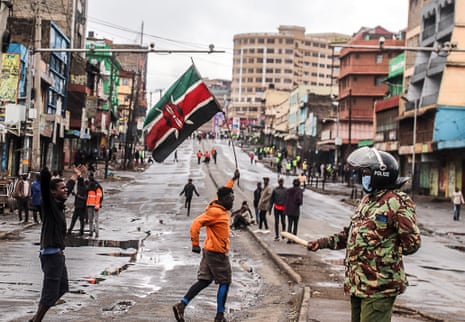
He said there had already been concerns about facial recognition being used to monitor activists in Uganda and that surveillance systems were used to crack down on gen Z-led protests in Kenya.
This could pose a danger to anyone deemed a threat to governments in the future, he warned.
“Historically marginalised communities, political activists, journalists and minority groups can be disproportionately affected when these technologies become embedded in policing and intelligence practices,” said Jili.
Yosr Jouini, who authored the report’s section on Algeria, said the systems were originally introduced in connection to “smart city” projects that promised to tackle crime and manage traffic but in reality often became mainly a tool of the security forces.
“The narrative is framed only through a security lens, which dismisses any other concern and does not provide enough mechanisms for citizens to ensure their rights are protected,” she said.
She highlighted how street protests in 2019 and 2021 played a key role in political change but the expansion of surveillance systems could make people hesitant about protesting in the future.
“We know a lot of protesters have been arrested when participating in public space gatherings. We don’t know for sure if it was based on the cameras but there’s a chilling effect – because it could happen – on people’s willingness to participate in public gatherings.”
"All the Empty Rooms" wins Oscar for Steve Hartman's project memorializing children killed in school shootings
March 15, 2026 / 10:49 PM EDT / CBS News
The documentary "All the Empty Rooms," which memorialized children killed in school shootings through a look at the bedrooms they never returned to, took home the Oscar for Best Documentary Short at the 98th Academy Awards on Sunday.
The film follows CBS News correspondent Steve Hartman and photographer Lou Bopp along their seven-year journey to document the toll of America's school shooting epidemic. Director Joshua Seftel accepted the Oscar on stage alongside Hartman, producer Conall Jones and Gloria Cazares, whose daughter Jackie was killed in the Uvalde school shooting in 2022.
"The four empty rooms in our film belonged to four young children who were all killed in school shootings: Hallie, Gracie, Dominic and Jackie," Seftel told the crowd before passing the mic to Cazares.
Wearing red dress and a pin with an image of Jackie, Cazares spoke of her 9-year-old daughter and appealed for an end to gun violence.
"Since that day, her bedroom has been frozen in time," Cazares said. "Jackie is more than just a headline. She is our light and our life. Gun violence is now the number one cause of death in kids and teens. We believe that if the world could see their empty bedrooms, we'd be a different America."
When Hartman traveled to Uvalde, Texas, where a gunman killed 19 children and two teachers at Robb Elementary School, Cazares told him that people are always telling her that they can't imagine what she's going through. But she said we need to imagine, and that's why she invited Hartman and Bopp into her home.
"It just makes everything more real for the public, for the world," Carazes said at the time. "Her room completely just speaks of who she was."
In Jackie's room, there was the chocolate she had saved for a day that never came, and an "About Me" chalkboard where she wrote that she wanted to be a veterinarian when she grew up.
Many of the children's rooms, like Jackie's, remained virtually untouched, years after the shootings.
"Their personalities shone through in the smallest details of their untouched rooms — hair ties on a doorknob, a toothpaste tube left uncapped, a ripped ticket for a school event — allowing me to uncover glimpses as to who they were," Bopp said in an essay about the project in 2024.
Explore the rooms:
Unmade beds and overdue books: Photographing the rooms of kids killed in school shootings
More from CBS "Sunday Morning":
Standing on the threshold of grief, documenting the bedrooms of kids killed in school shootings
Missed watching the 2026 Oscars? Here's how to watch the awards show now.
Updated on: March 15, 2026 / 10:59 PM EDT / CBS News
"Sinners" came into the 2026 Oscars with the most nominations ever, 16, but it was "One Battle After Another" that took home marquee awards like Best Picture and Best Director on Sunday night. Here's how to watch and what to know about the 98th annual Academy Awards.
Where to watch the Oscars with cable
The 98th annual Academy Awards were broadcast live on ABC stations, as well as on international networks worldwide, on Sunday, March 15, 2026.
How to stream the Oscars
The Oscars streamed live on Hulu and was available live on ABC.com and the ABC app if those services were connected to your regular TV provider. Other streaming services like YouTubeTV, AT&T TV and FuboTV also carried the show.
The Oscars will be available to stream Monday on ABC.com and Hulu for those who missed it live.
Who were the Oscar nominees?
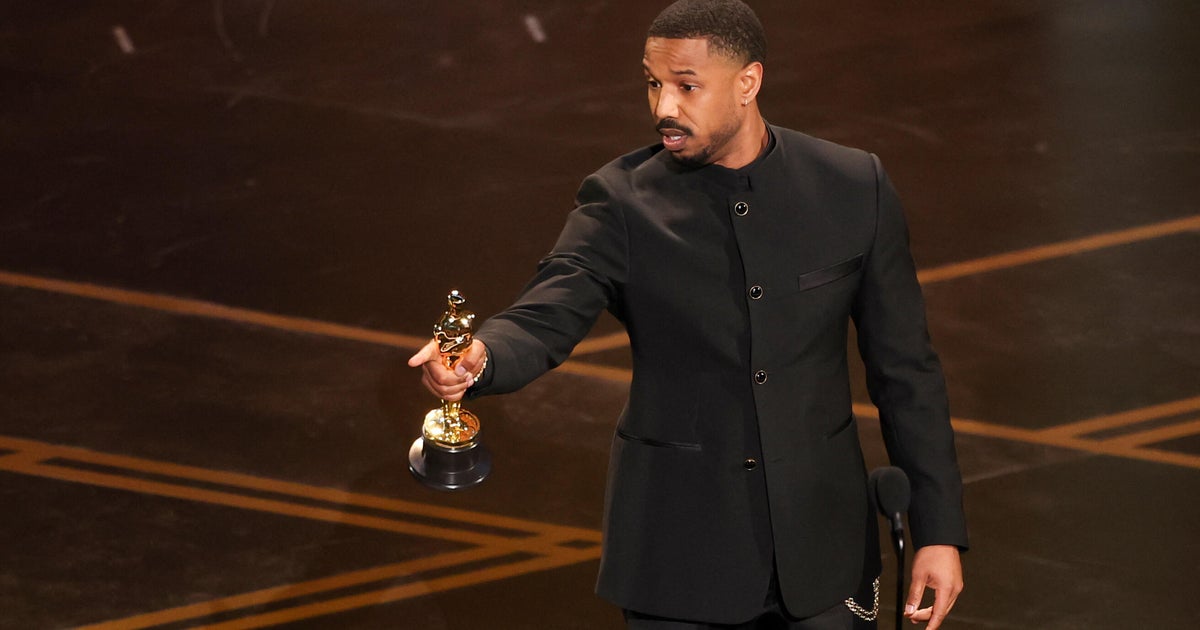
"Sinners" was eyeing a big night after nabbing a record-breaking 16 nominations, including for Best Picture, Best Director, Best Supporting Actress, Best Supporting Actor and Best Actor. Michael B. Jordan brought home the golden statue for taking on the dual roles of twin brothers Smoke and Stack, and Autumn Durald Arkapaw won for Best Cinematography, the first woman to win the award in Oscar history.
"One Battle After Another" was also up for a slew of top awards, winning Best Picture, Best Director and Best Adapted Screenplay, the first Oscar wins for Paul Thomas Anderson after being nominated 11 times prior to this year's ceremony.
See the full list of winners and nominees here.
Go behind the scenes to see excerpts of performances and highlights of CBS News interviews with nominees in these top categories:
- Best Picture
- Best Actor
- Best Actress
- Best Supporting Actor
- Best Supporting Actress
Who hosted the Oscars?
Former late-night TV host Conan O'Brien handled hosting duties at the Academy Awards for a second straight year.
O'Brien took over as master of ceremonies for the show last year following a two-year stint from fellow comedian and late-night host Jimmy Kimmel, who has hosted the Oscars a total of four times.
Matt Berry, the star of TV shows such as "The IT Crowd," "What We Do in the Shadows" and "Toast of London," was the announcer for the Oscars this year.
Where were the Oscars held?
The 2026 Oscars were held at the Dolby Theatre in Los Angeles.